These responses have not remained isolated but have frequently interacted. As doctors have studied hemophilia in order to try to do more for their patients, their investigations have notably advanced our general understanding of haemostasis; and as hemophiliacs have benefited from improvements in their treatment, they have been eager to help by giving blood samples for experiments as well as in raising funds for research.
My role comes in working with the blood samples...

The first descriptions which we may say probably do refer to haemophilia are from the end of the 18th century. Although William Hewson, despite his interest in abnormalities of the blood, does not appear to describe the disorder, the anonymous obituarist of Isaac Zoll, writing in 1791 (qu.McKusick 1962), Consbruch in 1793 and 1810, Rave in 1796 (qu. Bullock and Fildes, 1911), and Otto in 1803 all described families in which males suffered abnormally prolonged post-traumatic bleeding.
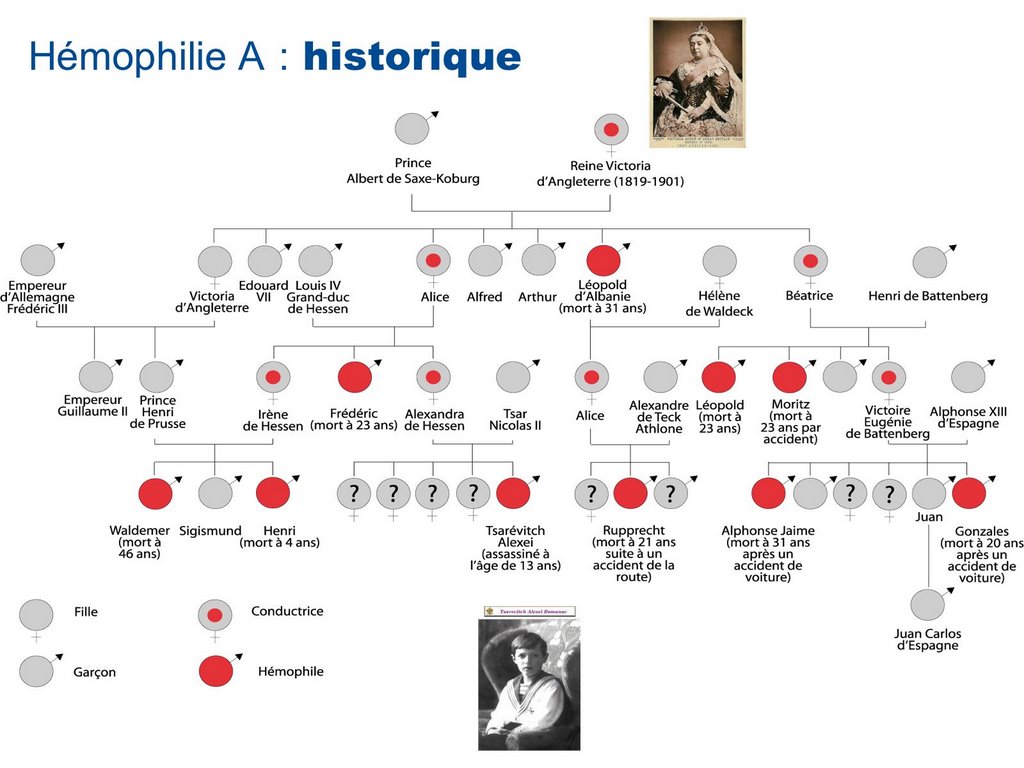
In the Zoll family, six brothers bled to death after minor injuries, but their half-siblings by a different mother were unaffected; in Consbruch's family, a man and two of his sister's sons were affected; Rave himself was affected, with his three brothers; and Otto noted that, although only males showed the symptoms, the disorder was transmitted by unaffected females to a proportion of their sons. Those who were affected were known as 'bleeders'. Otto, in America, traced his pedigree back to a woman, notice, named Smith who had settled near Plymouth, New Hampshire in about 1720-30.
The above history facts are traces from a very excellent review written by G. I. C. Ingram in the Journal of Clinical Pathology (1976). I find that this is a very good review concerning the history of a disease that is more known as the royal disorder due to its link between the Queen Victoria and hemophilia and her progeny. She was the carrier of the gene responsible for the malady.
Here is the picture of Queen Victoria's family...

Well, what exactly is Hemophilia?
Hemophilia (he-mo-FIL-e-a) is a hereditary disorder in which the blood does not clot normally and excessive bleeding results.
Hemophilia is an X-linked recessive disorder characterized by the inability to properly form blood clots. Until recently, hemophilia was untreatable, and only a few hemophiliacs survived to reproductive age because any small cut or internal hemorrhaging after even a minor bruise were fatal. Now hemophilia is treated with blood transfusions and infusions of a blood derived substance known as anti-hemophilic factor. However, such treatment is very expensive and involves the risk of contracting AIDS.
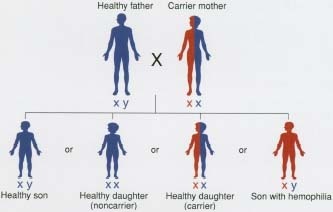
Actually before I go much deeper into the description of Hemophilia, I would end this up here for today.
The below image gives the lineage of the Queen Victoria's family. This is the main tree that had given a lot of interestfor many a people for finding a cure, but now, the reasons are much bigger and much demanding.
 The future posts would actually be on Acquired Hemophilia, a disease that I am more closely related to with respect to work. I hope you would enjoy reading this work as much as I do writing it.


No comments:
Post a Comment