The last few days had been hectic as I was busy trying to set up an important experiment. I would try to give details of this experiments when I am able to publish them.
Life in the lab and in Paris in general is being centered around Christmas and more so around different boutiques. Well, I guess that I would make this blog just not a very scientific one, but a blog mixed with Science and fun. Recently, I went for a walk on the sunny cold streets of Paris, and observed that the consumer society is mad after mobiles. I would very much like to get one, but then would wait for my contract with the Orange services to finish to get a new phone. I guess that I would either settle down for a K800i or a M600. Depends on what I would like to use it for. My major interest would be a Jajaj compatible mobile; and also a Mac compatible one.
Christmas seems to be the season for gifts, there are many other things that are famous close to Christmas. This seems to be light and joy and fun in the air. I think that Christmas is very important for us because we think of others and for others needs. For one season, we are being selfless and kind and thoughtful and sensitive to others existance. This is a very very important aspect that needs to be inspected more closely!
There is something in the air around us! It is enveloping us and surrounding us! There is love in the air, and there is God above us!
I guess that I would end here. Tomorrow is the repas de Noel in the lab, and we intend to spend a very happy day at the Cordeliers.
Wednesday, December 20, 2006


Friday, December 1, 2006
Acquired hemophilia A is a rare but life threatening hemorrhagic disorder caused by the spontaneous appearance of auto-antibodies directed against the endogenous plasma coagulation factor VIII
(Kessler CM. Acquired factor VIII autoantibody inhibitors: current concepts and potential therapeutic strategies for the future. Haematologica 2000;85 (10 Suppl):57-61; discussion 3).
The structure of an antibody/immunoglobulin is given below.

Anti-factor VIII autoantibodies are detected by their ability to inhibit factor VIII pro-coagulant activity in plasma, and are referred to as factor VIII inhibitors. Inhibitors to endogenous factor VIII develop in about one per million individuals each year.
(Franchini, AJH, 2005; Collins Blood 2006).
 In up to 50% of the cases, they occur spontaneously without an underlying medical condition. In the remaining cases, they develop in association with autoimmune disorders, malignancies, and drugs, or during the postpartum period. Acquired hemophilia A has a reported mortality between 6.2% and 44.3% (Green, Thromb Haemost 1981, Morrison, Blood, 1993, Collins, Blood 2006). FVIII inhibitors also arise in patients with congenital hemophilia A as alloantibodies directed to therapeutically administered exogenous factor VIII. Autoantibodies and alloantibodies against factor VIII share similar properties with respect to their isotypic distribution and mechanisms of inhibition of the activity of factor VIII. They may however differ in their epitope specificities and kinetics of factor VIII inactivation (Shapiro, JCI, 1967; Fulscher, Blood 1987, Scandella, Throm Res, 2001).
Catalytic antibodies are immunoglobulins with a capacity to hydrolyze the antigen for which they are specific. The presence of factor VIII-hydrolyzing IgG has been reported in about 50% of the patients with congenital severe hemophilia A, who have developed FVIII inhibitors following substitution therapy with exogenous factor VIII.
(Sébastien Lacroix-Desmazes, Nature Medicine, 1999)
 A cartoon of coagulation factor VIII is shown...
The rate of factor VIII hydrolysis was shown to correlate with the inhibitory activities scored in the plasma of the patients (Sébastien Lacroix-Desmazes, NEJM, 2002). The kinetics of factor VIII degradation by factor VIII-hydrolyzing IgG were compatible with a pathogenic role for catalytic antibodies in inactivation of the therapeutically administered factor VIII (Sébastien Lacroix-Desmazes, JI, 2006).
My work is to investigate the presence and prevalence of factor VIII-hydrolyzing IgG in a French cohort of patients with acquired hemophilia A.
(Kessler CM. Acquired factor VIII autoantibody inhibitors: current concepts and potential therapeutic strategies for the future. Haematologica 2000;85 (10 Suppl):57-61; discussion 3).
The structure of an antibody/immunoglobulin is given below.

Anti-factor VIII autoantibodies are detected by their ability to inhibit factor VIII pro-coagulant activity in plasma, and are referred to as factor VIII inhibitors. Inhibitors to endogenous factor VIII develop in about one per million individuals each year.
(Franchini, AJH, 2005; Collins Blood 2006).
 In up to 50% of the cases, they occur spontaneously without an underlying medical condition. In the remaining cases, they develop in association with autoimmune disorders, malignancies, and drugs, or during the postpartum period. Acquired hemophilia A has a reported mortality between 6.2% and 44.3% (Green, Thromb Haemost 1981, Morrison, Blood, 1993, Collins, Blood 2006). FVIII inhibitors also arise in patients with congenital hemophilia A as alloantibodies directed to therapeutically administered exogenous factor VIII. Autoantibodies and alloantibodies against factor VIII share similar properties with respect to their isotypic distribution and mechanisms of inhibition of the activity of factor VIII. They may however differ in their epitope specificities and kinetics of factor VIII inactivation (Shapiro, JCI, 1967; Fulscher, Blood 1987, Scandella, Throm Res, 2001).
Catalytic antibodies are immunoglobulins with a capacity to hydrolyze the antigen for which they are specific. The presence of factor VIII-hydrolyzing IgG has been reported in about 50% of the patients with congenital severe hemophilia A, who have developed FVIII inhibitors following substitution therapy with exogenous factor VIII.
(Sébastien Lacroix-Desmazes, Nature Medicine, 1999)
 A cartoon of coagulation factor VIII is shown...
The rate of factor VIII hydrolysis was shown to correlate with the inhibitory activities scored in the plasma of the patients (Sébastien Lacroix-Desmazes, NEJM, 2002). The kinetics of factor VIII degradation by factor VIII-hydrolyzing IgG were compatible with a pathogenic role for catalytic antibodies in inactivation of the therapeutically administered factor VIII (Sébastien Lacroix-Desmazes, JI, 2006).
My work is to investigate the presence and prevalence of factor VIII-hydrolyzing IgG in a French cohort of patients with acquired hemophilia A.
Thursday, November 30, 2006
Future Posts
 The future posts in this blog would comprise of small introduction in the field of acquired hemophilia.
I forgot to mention, that I am actually connected to the field of hemophilia because I work directly with the plasma of patients. I purify IgG to test their catalytic activity. The IgG from these patients are 'Catalysers', but in a different sense that they hydrolyze factor VIII!
 Will slowly introduce you to all these beautiful aspects that I have discovered working at the INSERM UMR S 681 research laboratories.
Hemophilia - Catalysers are involved here too...
The history of hemophilia shows the human mind attempting to define and encompass a mysterious yet a fascinating phenomenon; and also the human heart responding to the challenge of repeated adversity.
These responses have not remained isolated but have frequently interacted. As doctors have studied hemophilia in order to try to do more for their patients, their investigations have notably advanced our general understanding of haemostasis; and as hemophiliacs have benefited from improvements in their treatment, they have been eager to help by giving blood samples for experiments as well as in raising funds for research.
My role comes in working with the blood samples...
The first descriptions which we may say probably do refer to haemophilia are from the end of the 18th century. Although William Hewson, despite his interest in abnormalities of the blood, does not appear to describe the disorder, the anonymous obituarist of Isaac Zoll, writing in 1791 (qu.McKusick 1962), Consbruch in 1793 and 1810, Rave in 1796 (qu. Bullock and Fildes, 1911), and Otto in 1803 all described families in which males suffered abnormally prolonged post-traumatic bleeding.
In the Zoll family, six brothers bled to death after minor injuries, but their half-siblings by a different mother were unaffected; in Consbruch's family, a man and two of his sister's sons were affected; Rave himself was affected, with his three brothers; and Otto noted that, although only males showed the symptoms, the disorder was transmitted by unaffected females to a proportion of their sons. Those who were affected were known as 'bleeders'. Otto, in America, traced his pedigree back to a woman, notice, named Smith who had settled near Plymouth, New Hampshire in about 1720-30.
The above history facts are traces from a very excellent review written by G. I. C. Ingram in the Journal of Clinical Pathology (1976). I find that this is a very good review concerning the history of a disease that is more known as the royal disorder due to its link between the Queen Victoria and hemophilia and her progeny. She was the carrier of the gene responsible for the malady.
Here is the picture of Queen Victoria's family...
Well, what exactly is Hemophilia?
Hemophilia (he-mo-FIL-e-a) is a hereditary disorder in which the blood does not clot normally and excessive bleeding results.
The below image gives the lineage of the Queen Victoria's family. This is the main tree that had given a lot of interestfor many a people for finding a cure, but now, the reasons are much bigger and much demanding.
 The future posts would actually be on Acquired Hemophilia, a disease that I am more closely related to with respect to work. I hope you would enjoy reading this work as much as I do writing it.
These responses have not remained isolated but have frequently interacted. As doctors have studied hemophilia in order to try to do more for their patients, their investigations have notably advanced our general understanding of haemostasis; and as hemophiliacs have benefited from improvements in their treatment, they have been eager to help by giving blood samples for experiments as well as in raising funds for research.
My role comes in working with the blood samples...

The first descriptions which we may say probably do refer to haemophilia are from the end of the 18th century. Although William Hewson, despite his interest in abnormalities of the blood, does not appear to describe the disorder, the anonymous obituarist of Isaac Zoll, writing in 1791 (qu.McKusick 1962), Consbruch in 1793 and 1810, Rave in 1796 (qu. Bullock and Fildes, 1911), and Otto in 1803 all described families in which males suffered abnormally prolonged post-traumatic bleeding.
In the Zoll family, six brothers bled to death after minor injuries, but their half-siblings by a different mother were unaffected; in Consbruch's family, a man and two of his sister's sons were affected; Rave himself was affected, with his three brothers; and Otto noted that, although only males showed the symptoms, the disorder was transmitted by unaffected females to a proportion of their sons. Those who were affected were known as 'bleeders'. Otto, in America, traced his pedigree back to a woman, notice, named Smith who had settled near Plymouth, New Hampshire in about 1720-30.
The above history facts are traces from a very excellent review written by G. I. C. Ingram in the Journal of Clinical Pathology (1976). I find that this is a very good review concerning the history of a disease that is more known as the royal disorder due to its link between the Queen Victoria and hemophilia and her progeny. She was the carrier of the gene responsible for the malady.
Here is the picture of Queen Victoria's family...

Well, what exactly is Hemophilia?
Hemophilia (he-mo-FIL-e-a) is a hereditary disorder in which the blood does not clot normally and excessive bleeding results.
Hemophilia is an X-linked recessive disorder characterized by the inability to properly form blood clots. Until recently, hemophilia was untreatable, and only a few hemophiliacs survived to reproductive age because any small cut or internal hemorrhaging after even a minor bruise were fatal. Now hemophilia is treated with blood transfusions and infusions of a blood derived substance known as anti-hemophilic factor. However, such treatment is very expensive and involves the risk of contracting AIDS.
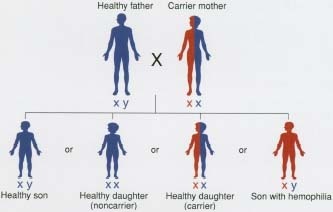
Actually before I go much deeper into the description of Hemophilia, I would end this up here for today.
The below image gives the lineage of the Queen Victoria's family. This is the main tree that had given a lot of interestfor many a people for finding a cure, but now, the reasons are much bigger and much demanding.
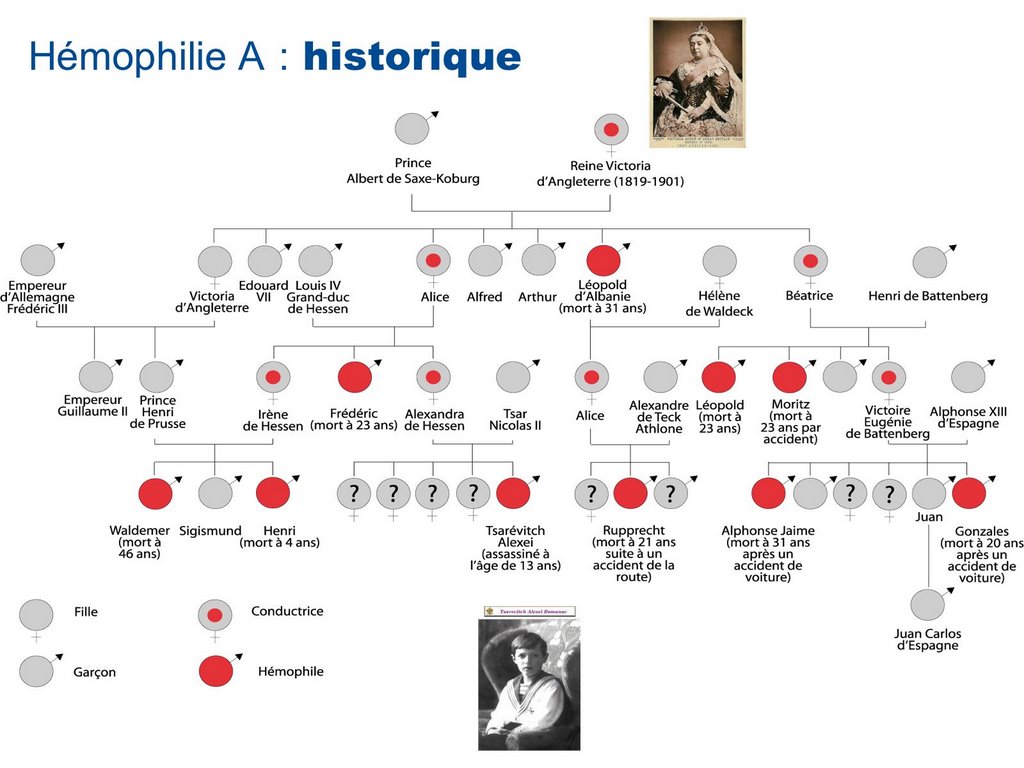 The future posts would actually be on Acquired Hemophilia, a disease that I am more closely related to with respect to work. I hope you would enjoy reading this work as much as I do writing it.
Wednesday, November 29, 2006
My First Post
Before I start this post I would like to say that the ideas published here are only my personal beliefs and that these might vary from the beliefs of many of you who might visit this blog...
Here I go...
The first catalysers or catalysts on this planet would be the entities that give birth to a being. They would caress and take care of the little being till the infant comes off age.
For the child, the parents are the first catalysts. He tries to imitate them and picks up their actions very fast. I too had the same catalysers who had forwarded me to a good life.
Once the child starts his schooling, he finds certain other friends or teachers who would give lots of interest to the child. I had a teacher who inspired a lot of Biological interest in me. That is the reason why I had ended up in the Biological world.
Further on my present work for my doctoral studies revolves around Catalytic Antibodies in patients with different underlying diseases. This had further boosted my interest in this field of catalysts and an overall interest on Catalysers as such.
Looking back in 24 years of my life, I feel that these 'fill ins' that I had described in the Blog Description are very important as they have formed me into what I am now.
My constant guidance, strength and the strongest Catalyser is GOD. He is the main force behind everything. He is the main Catalyst that turns life and the strongest Catalyser that believers on this third rock from the Sun aspire for!
Well before I loose out myself into the various philosophies and stories, I would end my introductory blog here...
Here I go...
The first catalysers or catalysts on this planet would be the entities that give birth to a being. They would caress and take care of the little being till the infant comes off age.
For the child, the parents are the first catalysts. He tries to imitate them and picks up their actions very fast. I too had the same catalysers who had forwarded me to a good life.
Once the child starts his schooling, he finds certain other friends or teachers who would give lots of interest to the child. I had a teacher who inspired a lot of Biological interest in me. That is the reason why I had ended up in the Biological world.
Further on my present work for my doctoral studies revolves around Catalytic Antibodies in patients with different underlying diseases. This had further boosted my interest in this field of catalysts and an overall interest on Catalysers as such.
Looking back in 24 years of my life, I feel that these 'fill ins' that I had described in the Blog Description are very important as they have formed me into what I am now.
My constant guidance, strength and the strongest Catalyser is GOD. He is the main force behind everything. He is the main Catalyst that turns life and the strongest Catalyser that believers on this third rock from the Sun aspire for!
Well before I loose out myself into the various philosophies and stories, I would end my introductory blog here...
Subscribe to:
Posts (Atom)
